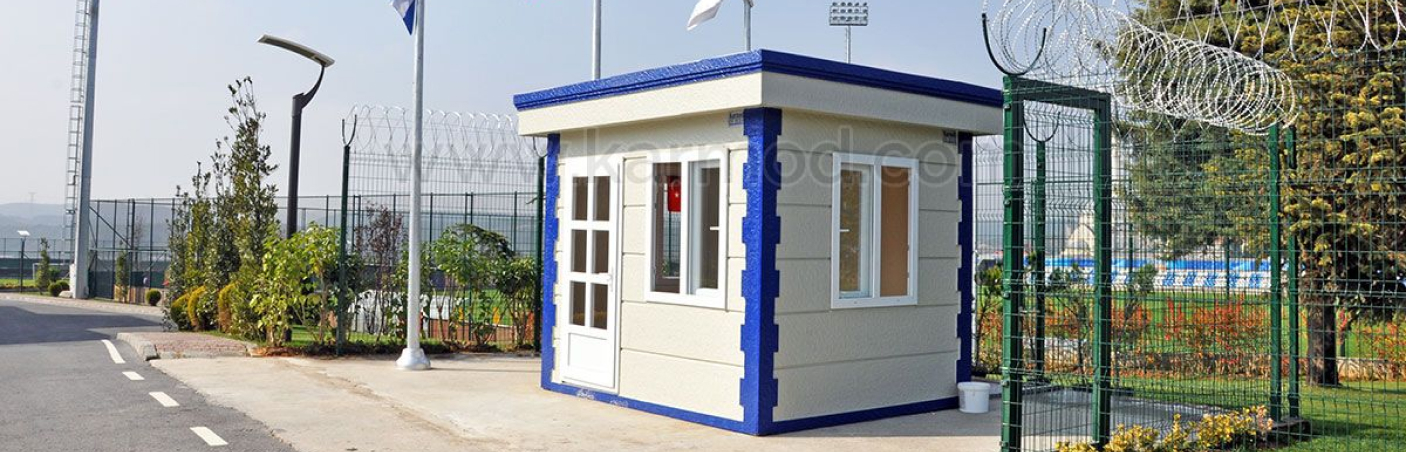
When businesses start planning for a new security booth, one of the first questions is usually not about color, window placement, or insulation. It is much simpler than that: how long will it take to arrive?
That question matters because security needs are often tied to real deadlines. A warehouse may be preparing for a compliance inspection. A school may need a controlled entry point before a new term begins. A parking facility may be expanding access control. A construction site may need a guard point before operations scale up. In all of these cases, delivery time affects planning just as much as design.
The most honest answer is that there is no single fixed timeline for every project. Still, there is a common range that buyers can expect. Across the prefab booth market, standard security booths are often delivered in roughly 2 to 6 weeks, while more customized or specialized units may take longer depending on design complexity, approvals, and shipping distance. Competitor guidance in the market reflects that same pattern: Guardian Booth says standard booths are usually delivered in 2–3 weeks but can stretch to 6 weeks, while its general FAQ lists a typical lead time of about 3–6 weeks; Porta-King also notes that lead time varies based on model and customization level.
In most cases, the “typical” delivery time for a security booth depends less on the idea of the booth itself and more on how standard or customized the final order becomes.
A Typical Delivery Range for Standard Security Booths
For a relatively standard prefab security booth, buyers usually expect the quickest turnaround when the unit uses an established model, familiar materials, and limited modifications. That is why many suppliers can move faster with standard production lines than with heavily customized builds. Guardian Booth publicly states that standard booths are usually delivered in 2–3 weeks, though timing may extend to 6 weeks depending on manufacturing load, while its FAQ gives a broader 3–6 week expectation and notes that timing changes by season and delivery location.
That industry pattern makes sense. A standard booth generally involves:
- pre-defined dimensions
- known window and door layouts
- routine electrical preparation
- repeatable manufacturing steps
- simpler packing and transport coordination
For buyers in the U.S. market, this means a realistic expectation is not “immediate shipment,” but usually a relatively short production-and-delivery cycle compared with conventional site-built structures. That is one reason modular security solutions remain attractive: even when the lead time is a few weeks, they are still far faster than planning and building a permanent guard structure from scratch. Karmod Kiosk’s own product language around modular cabins also emphasizes fast installation and long-lasting performance, which aligns well with what most buyers are looking for in time-sensitive projects.
Why Some Security Booths Arrive Faster Than Others
Two projects may both involve “security booths,” yet their timelines can be very different. The reason is simple: not every booth is being made under the same conditions.
The most common factors that affect delivery time include:
- customization level
- booth size
- glazing and door configuration
- special insulation or climate needs
- electrical and communications preparation
- security rating requirements
- production queue at the factory
- final delivery distance and logistics
A compact, standard guard booth for a parking entrance is very different from a reinforced unit for a high-security site. This is why many manufacturers avoid giving a single universal promise. Porta-King specifically says lead times vary depending on the model and design chosen, and notes that custom security buildings and guard booths may require longer production time than standard options.
From a buyer’s perspective, the practical takeaway is clear: the earlier the project scope is finalized, the more predictable the delivery timeline becomes. Delays often begin not in manufacturing, but in the back-and-forth stage where dimensions, equipment, and specifications are still changing.
Standard Models vs. Custom Security Booths
One of the biggest timeline differences comes down to whether the booth is standard or custom.
A standard booth usually moves more quickly because the supplier already knows the structure, details, and workflow. A custom booth requires additional coordination, and sometimes additional engineering, before production can begin. That is especially true when the buyer asks for unusual layouts, special finishes, expanded interior use, or elevated protection requirements.
Typical examples of custom requests that may extend lead time include:
- non-standard dimensions
- extra HVAC or electrical integration
- ballistic or reinforced construction
- additional counters or storage features
- branding elements or custom exterior finishes
- region-specific weather adaptations
This is why high-security products naturally carry different timing expectations. For example, armored or ballistic-rated units involve more specialized construction and may require more coordination than ordinary site-access booths. Karmod Kiosk’s armored cabin positioning clearly places it in a higher-security category rather than a basic standard booth category, which implies a different production path from a more routine modular model.
If the project requires broader durability with lighter modular characteristics, a product family such as a grp kiosk cabin may fit projects where weather resistance, low maintenance, and practical deployment matter. Karmod Kiosk describes its GRP kiosk cabins as lightweight, weatherproof, corrosion-resistant, and modular, all of which can support smoother installation planning in many security and service applications.
Delivery Time Is Not Only About Manufacturing
A common mistake is to think of delivery time as factory time only. In practice, the full timeline often includes several linked stages:
- confirming the final model
- approving specifications
- scheduling production
- preparing the booth for shipment
- arranging transportation
- receiving and placing the unit on-site
Some manufacturers openly note this approval stage. Porta-King, for example, explains on a related modular product page that production timing often runs after design approval and signed drawings, illustrating how paperwork and approval cycles can directly affect the schedule.
That matters because even a well-built prefab booth can lose time if the site is not ready. Access constraints, crane coordination, utility planning, and delivery routing all shape the real project calendar. So when a customer asks, “What is the typical delivery time?”, the best answer includes both factory lead time and site readiness.
How Buyers Can Keep the Timeline Shorter
If fast delivery is a priority, there are several practical ways to reduce avoidable delays. Most of them are not complicated, but they require early clarity.
The most effective ways to keep a project moving are:
- choose a standard model when possible
- finalize dimensions early
- avoid late-stage spec changes
- confirm site access before production ends
- align utilities and foundation needs in advance
- ask early whether expedited options exist
Guardian Booth publicly notes that it can sometimes expedite standard booths in 48–72 hours for an added fee, and its Quick Ship material says certain standard models may be delivered within two weeks after payment is processed. That is not the norm for every order, but it does show how standardization can significantly reduce timelines when urgency is high.
For buyers comparing suppliers, this is an important distinction. A company may advertise fast delivery, but the real question is whether that speed applies to standard stocked models, moderately customized units, or truly custom builds. The more precise that conversation is, the better the final planning outcome.
Why Prefab Security Booths Still Save Time Overall
Even when a security booth takes several weeks to produce and deliver, prefab models still offer a major time advantage over conventional construction. A site-built booth often involves design coordination, permits, contractors, weather delays, and longer disruption on-site. Prefabricated units compress much of that effort into off-site manufacturing and then arrive ready for positioning and connection.
That is why modular solutions continue to appeal to schools, logistics operators, industrial facilities, parking operators, and public-sector sites. Karmod Kiosk’s modular product positioning emphasizes fast installation, and this is one of the most practical reasons buyers choose prefabricated structures in the first place. When time matters, shortening the on-site portion of the project is often just as valuable as shortening factory time.
A broader solution category like modular kiosks also supports that thinking. In many cases, the appeal is not only the booth itself, but the fact that modular construction helps businesses deploy operational spaces faster and with less disruption than traditional building routes.
For most buyers, the real advantage of a prefab security booth is not that it arrives instantly, but that it reaches operational readiness far faster than a permanent build.
So, What Should Buyers Expect?
For a practical planning benchmark, buyers should usually think in ranges rather than promises. A standard security booth may often fall into a roughly 2–6 week window, while more specialized or custom projects can take longer depending on design, workload, and shipping requirements. Expedited options may exist for certain standard models, but they are the exception rather than the baseline.
That makes the smartest buying approach a simple one:
- define the use case clearly
- decide how much customization is truly necessary
- confirm the site is ready
- ask for a realistic lead time tied to the exact model
For U.S. buyers evaluating security booth options, that balance between speed and specification is what matters most. Karmod Kiosk belongs naturally in that conversation because delivery expectations today are shaped not only by manufacturing speed, but by how well a modular supplier can align design, production, and site use into one smooth process. And when that happens, a security booth becomes much easier to plan, order, and deploy with confidence.

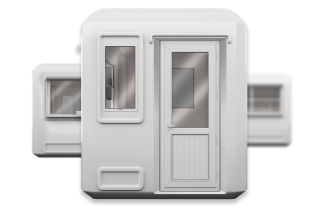 GRP Kiosk Cabin
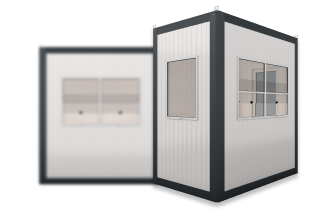 Sandwich Panel Cabin
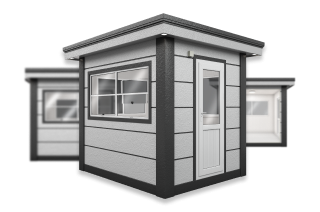 Metro City Cabin
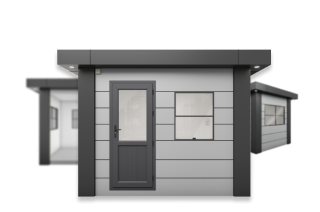 Kompo City Cabin
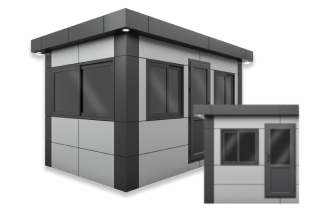 Metro Lux Cabin
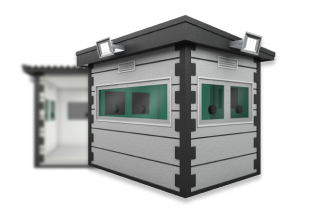 Armored Cabin
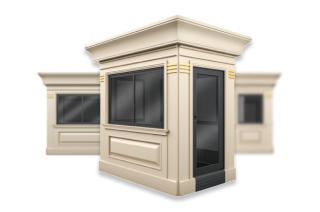 Precast Cabin
 Wc - Shower Cabin
 Economic Container
 +90 (216) 321 3221
 info@karmodkiosk.com