Choosing between a single office cabin and a multi-room cabin can have a significant impact on how efficiently a temporary workplace operates. For UK construction companies, site managers and businesses requiring additional workspace, the decision involves more than simply comparing floor areas.
A single office cabin may provide everything needed for a small team, while a multi-room arrangement can support separate departments, confidential meetings and different working activities. However, additional rooms also introduce considerations around available space, installation and running costs.
Understanding how each layout performs in everyday use can help businesses select accommodation that supports their current requirements without creating unnecessary expense.
What Is a Single Office Cabin?
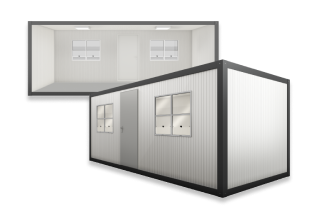
A single office cabin provides one principal working area within a compact structure. It may accommodate an individual workstation, several desks or a combination of office furniture and storage.
These cabins are commonly considered for site supervision, temporary administration, reception activities and smaller operational teams.
A Mobo Cabin may be worth evaluating for businesses seeking adaptable accommodation with a relatively compact footprint.
The main advantage of a single-room arrangement is its simplicity. Employees share the same space, equipment can be positioned around the perimeter and communication between colleagues is straightforward.
However, the suitability of this arrangement depends on the type of work taking place.
An open office can become distracting when several employees regularly make telephone calls, hold meetings or perform tasks requiring concentration.
When Does a Single Office Cabin Work Best?
Single-room cabins are particularly practical when the workforce is small and employees perform related activities.
For example, a construction site supervisor and an administrative assistant may benefit from sharing one office. They can exchange information quickly, review documents together and coordinate daily activities without moving between rooms.
A single office can also be appropriate for temporary projects with predictable staffing levels.
Where the building is occupied for a limited period, a straightforward layout may be easier to organise and maintain.
Space efficiency is another advantage. Without internal partitions, more of the available floor area can be used for furniture and movement.
However, the absence of separate rooms means privacy must be managed through working arrangements rather than physical separation.
What Makes a Multi-Room Cabin Different?
A multi-room cabin divides the available space into distinct working areas.
Depending on the project, these may include a management office, meeting room, administrative workspace or secure storage area.
The purpose is to separate activities that would otherwise interfere with one another.
For instance, a project manager may need to discuss commercial matters privately while engineers continue reviewing drawings elsewhere.
In a single-room office, those activities could compete for the same space.
A multi-room arrangement allows them to happen simultaneously, provided the cabin is appropriately sized.
The additional flexibility can be valuable on larger UK construction projects, industrial sites and long-term infrastructure programmes.
Comparing the Two Office Cabin Layouts
| Consideration |
Single Office Cabin |
Multi-Room Cabin |
| Space requirements |
Generally smaller footprint |
More space required |
| Privacy |
Limited without partitions |
Better separation of activities |
| Team communication |
Easy within one room |
May require movement between rooms |
| Meetings |
Shared working space |
Dedicated meeting area possible |
| Installation planning |
Often simpler |
Potentially more complex |
| Flexibility |
Suitable for smaller teams |
Supports multiple functions |
| Running costs |
Often lower for comparable specifications |
May be higher depending on size and systems |
The table provides a general comparison rather than a fixed rule. Actual performance and cost depend on the cabin specification, dimensions and intended use.
How Staff Numbers Influence the Decision
The number of employees is an obvious consideration, but it should not be the only one.
Three employees who perform similar administrative tasks may work comfortably in a shared office.
Two employees handling confidential information and frequent client meetings may benefit from separate rooms.
The important distinction is between the number of occupants and the activities they perform.
Businesses should consider how often employees need uninterrupted concentration, whether visitors enter the office and how frequently meetings take place.
The cabin should provide enough space for furniture, circulation and equipment without forcing employees to work in uncomfortable positions.
Privacy, Meetings and Confidential Work
Privacy becomes increasingly important when an office accommodates management responsibilities.
Construction teams may need to discuss contracts, staffing matters, budgets or incident reports.
Holding these conversations in an open-plan environment can be difficult, particularly when other employees are working nearby.
A dedicated meeting room can provide a more appropriate setting.
However, a multi-room cabin is not automatically necessary for every business. Where private meetings are infrequent, a separate meeting facility elsewhere on site may be more economical.
The decision should reflect actual demand rather than an assumption that more rooms always mean better productivity.
Consider Whether Visitors Need Their Own Space
Some temporary offices also serve as reception points for contractors, suppliers or members of the public.
In these circumstances, visitor traffic can interrupt administrative work.
A dedicated reception area may be useful, particularly where visitors need directions, identification checks or general assistance.
For sites with regular public-facing enquiries, an Information Kiosk may provide a separate point of contact rather than requiring visitors to enter the main office.
This arrangement can help preserve privacy and reduce interruptions within the working environment.
It may also allow the principal office cabin to remain smaller.
Installation Space and Site Access
A larger or multi-room structure may require more extensive planning before installation.
The available ground area, delivery route, unloading arrangements and utility connections should all be assessed.
On restricted urban construction sites, a compact single office may be the most practical option simply because available space is limited.
Remote sites present different challenges. Narrow access roads, uneven ground and limited lifting space may affect which structures can be delivered safely.
Where compact accommodation is required, a GRP Kiosk Cabin may be considered for suitable administrative applications, subject to its dimensions and available specification.
The physical characteristics of the site should influence the choice before the internal layout is finalised.
Heating, Ventilation and Everyday Running Costs
The size and arrangement of an office cabin can influence its ongoing operating costs.
A larger building generally requires more consideration of heating distribution, ventilation and lighting.
However, running costs cannot be determined from the number of rooms alone.
Insulation quality, glazing, occupancy, equipment and operating hours all affect energy consumption.
A well-specified multi-room cabin may perform better than a poorly insulated single-room structure.
For UK workplaces, maintaining suitable temperatures and adequate ventilation is particularly important during colder months and periods of extended occupancy.
Any comparison should therefore consider the actual technical specification rather than assuming the smallest option will always be the most efficient.
Planning for Future Business Requirements
Temporary accommodation is often installed for projects that evolve over time.
A construction site may begin with a small management team and later require additional engineers, subcontractor coordinators or administrative employees.
Choosing a cabin based only on the initial workforce can create difficulties as the project develops.
Businesses should consider whether staffing levels are likely to increase and whether additional accommodation could be installed later.
A single office may offer the most practical solution for a short project with stable requirements.
A multi-room arrangement may provide greater long-term value where several departments need dedicated working areas.
The aim is to provide appropriate capacity without paying for substantial unused space.
Which Office Cabin Should You Choose?
A single office cabin is often the better choice for smaller teams, straightforward administration and sites with limited available space.
Its open layout supports communication and can make efficient use of a compact footprint.
A multi-room cabin becomes more attractive when privacy, simultaneous meetings and separation between different working activities are essential.
For UK businesses, the decision should also account for delivery access, workplace comfort, utilities and the expected duration of use.
Rather than choosing solely by size or initial cost, consider how the office will function on an ordinary working day.
The most suitable cabin is the one that provides enough space for people to work comfortably, supports the activities taking place and remains practical as operational requirements change.

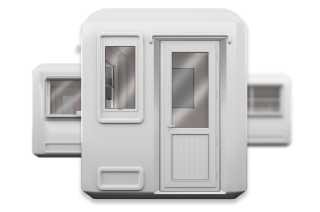 GRP Kiosk Cabin
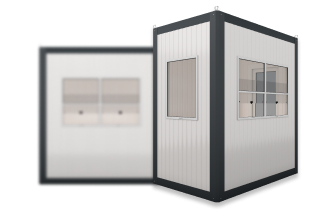 Sandwich Panel Cabin
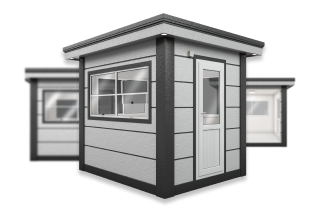 Metro City Cabin
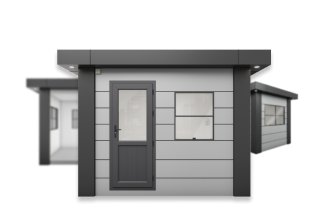 Kompo City Cabin
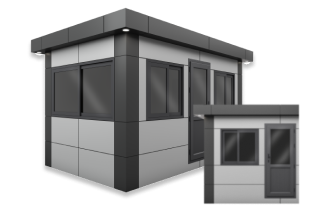 Metro Lux Cabin
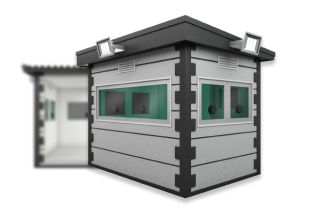 Armored Cabin
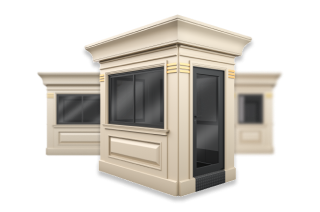 Precast Cabin
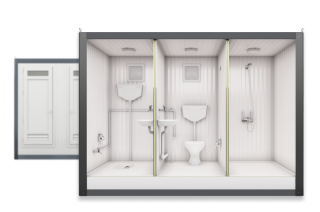 Wc - Shower Cabin
 Economic Container
 +90 (216) 321 3221
 info@karmodkiosk.com
