Food and drink are an essential part of the experience at festivals, outdoor concerts, sporting events and seasonal attractions across the UK. For operators, however, serving hundreds or potentially thousands of customers from a compact temporary location requires much more than placing equipment inside a kiosk and opening a service hatch.
A successful festival food kiosk needs to support fast service, safe food handling, efficient staff movement and straightforward cleaning. It also needs to perform in an outdoor environment where rain, wind, changing temperatures and intense periods of customer demand can all affect day-to-day operation.
The physical layout of the kiosk can have a direct impact on queue times, staff productivity and hygiene. Poorly positioned equipment creates unnecessary movement, while insufficient storage can quickly turn preparation areas into cluttered spaces.
For businesses planning a food kiosk for a UK festival or outdoor event, the priority should therefore be to design the structure around the operation taking place inside it.
Start with the Type of Food You Will Serve
The menu should be established before the kiosk layout is finalised.
A unit serving coffee and pre-packaged snacks has very different requirements from a kiosk preparing hot meals.
The type of food being handled can influence:
Creating an equipment list at an early stage helps determine how much internal space is genuinely required.
Operators should also consider peak demand.
Equipment that is adequate during quieter periods may struggle when hundreds of customers arrive between performances or during scheduled event breaks.
Capacity planning should therefore reflect the busiest expected trading periods rather than average demand alone.
Design the Layout Around Staff Workflow
Festival food service can become extremely busy very quickly.
An efficient layout reduces unnecessary movement and allows staff to complete tasks in a logical sequence.
For example, an operation may follow a workflow such as:
order → payment → preparation → finishing → collection.
Equipment and workstations should ideally follow a similar physical sequence.
If employees repeatedly need to cross each other's paths to access refrigerators, packaging or payment equipment, service can slow down and the workspace may become unnecessarily congested.
The same principle applies to storage.
Frequently used items should be positioned close to the area where they are needed.
Less frequently used stock can be stored in secondary areas.
Designing around real staff movement is generally more effective than simply placing equipment wherever it physically fits.
Choosing a Suitable Kiosk Structure
Festival environments require structures that are practical, durable and suitable for outdoor use.
A GRP Kiosk Cabin can provide a compact customer-facing structure for kiosk and service applications where weather resistance and a practical modular format are important considerations.
The final choice should reflect how the food business will operate.
Operators should assess the number of employees, equipment dimensions, storage requirements and customer-facing areas before selecting the size of the structure.
A slightly larger unit may be worthwhile if it significantly improves staff movement during peak service.
At the same time, unnecessary floor area can make transport, positioning and site planning more complicated.
The objective is to find a footprint that supports the operation without wasting space.
Plan Service Hatches Around Customer Flow
The position of the service hatch can significantly affect queue management.
Customers need to understand where they should order, pay and collect their food.
For lower-volume operations, all three activities may take place at a single point.
For busy festival kiosks, separating ordering and collection can help prevent customers waiting for prepared food from blocking those who are ready to place an order.
Signage should make the process obvious.
Menu boards should ideally be visible before customers reach the front of the queue. This gives people time to make a decision and can reduce the amount of time spent ordering.
The exterior space around the kiosk is therefore just as important as the internal layout.
Managing Queues at Busy Festivals
Festival demand often arrives in waves.
A food kiosk may be relatively quiet while a performance is taking place and then experience a sudden queue when the performance finishes.
The surrounding area needs enough space to accommodate this pattern.
Queues should not obstruct:
Where high volumes are expected, physical queue barriers may help maintain an organised customer flow.
Operators should also consider how people will leave the collection area after receiving their order.
Customers moving away from the kiosk should not have to walk back through the ordering queue.
Food Hygiene Starts with the Layout
Good hygiene depends partly on staff procedures, but the physical design of the kiosk can make those procedures easier to follow.
Preparation surfaces should be suitable for regular cleaning and positioned so that employees can maintain organised work areas.
Depending on the food operation, the layout may need to provide separate areas for different activities.
The kiosk should also provide sufficient space for appropriate hand-washing arrangements where required.
Storage should keep ingredients, packaging and cleaning materials organised rather than allowing them to accumulate around preparation surfaces.
Flooring is another important consideration.
Festival kiosks can experience heavy use throughout the day, so floors should be practical to clean and suitable for the working environment.
Hand-Washing and Welfare Provision
Food operations need appropriate hygiene facilities, but staff welfare also needs to be considered across the wider event site.
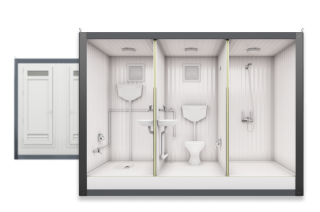
Where separate sanitation infrastructure is required, a modular WC Shower Cabin can form part of a broader approach to providing welfare and hygiene facilities for temporary or outdoor locations.
The exact arrangement will depend on the scale of the festival, staffing levels and the facilities already available at the venue.
The important point is that food kiosk planning should not take place in isolation.
Staff need access to appropriate welfare facilities throughout their shifts, while the event as a whole needs sufficient sanitation capacity for employees and visitors.
Water Supply and Wastewater
Food kiosks may require water for hand washing, cleaning, drink preparation or food-related activities.
The volume required depends on the operation.
Water requirements should be calculated before the event rather than relying on assumptions once trading has begun.
Wastewater also needs a planned route.
Operators should determine how wastewater will be collected or connected to suitable infrastructure.
This is particularly important for temporary festival locations where permanent utility connections may not be immediately available beside the kiosk.
Water and drainage arrangements can influence where the unit is positioned, so they should be considered during site planning.
Electrical Requirements
Festival food kiosks often use multiple electrical appliances simultaneously.
These can include:
The total electrical requirement should be calculated according to the actual equipment specification.
Operators should avoid assuming that a basic power connection will automatically support everything inside the kiosk.
High-demand appliances can significantly increase the electrical load.
Planning capacity early also allows sockets and connections to be positioned close to the equipment they serve, creating a tidier and more practical workspace.
Ventilation and Internal Temperature
Food preparation equipment can generate considerable heat.
During a busy summer festival, a small kiosk containing several employees, refrigerators and cooking equipment can become uncomfortable quickly.
Ventilation should therefore be considered alongside insulation.
Where cooking processes generate heat, steam or fumes, additional ventilation or extraction requirements may also apply depending on the equipment and activity.
The goal is to maintain an internal environment that allows employees to work comfortably while supporting the requirements of the food operation.
The design should account for both warmer event days and cooler periods during the British festival season.
Preparing for Wet British Weather
Festival operators cannot assume dry weather.
Rain can affect queues, service windows, flooring around the kiosk and the movement of supplies.
The kiosk itself should provide reliable protection from the elements.
Doors, windows and service hatches should be appropriately sealed when closed.
Roof drainage should direct rainwater away from customer service areas where possible.
Operators may also consider shelter around ordering points, depending on the event layout and venue requirements.
External surfaces should remain practical in wet conditions, while access routes should be planned to reduce problems caused by mud or standing water.
Storage and Stock Replenishment
A food kiosk needs enough stock to continue trading during busy periods, but excessive internal storage can reduce valuable working space.
Operators therefore need a replenishment plan.
Some stock can remain inside the kiosk, while additional supplies may be stored in a nearby back-of-house location.
The distance between the kiosk and secondary storage should be considered carefully.
Staff repeatedly travelling through crowded public areas to collect supplies can create inefficiencies.
Stock deliveries should ideally be scheduled so that they do not interfere with customer queues or peak trading periods.
Waste Management
Busy food operations can generate substantial waste.
Packaging, food waste and empty containers need somewhere to go throughout the trading period.
Bins should be positioned so that staff can use them easily without interfering with preparation areas.
Waste should also be removed regularly.
Allowing rubbish to accumulate inside a compact kiosk can reduce working space and make maintaining cleanliness more difficult.
Customer waste requires separate planning.
Bins positioned around the service area can help keep the surrounding event space cleaner, particularly where takeaway packaging is used extensively.
Card Payments and Connectivity
Contactless and card payments are central to many UK festival operations.
Reliable connectivity is therefore essential.
Event sites can present challenges because large numbers of people may be using mobile networks simultaneously.
Operators should establish how payment terminals will connect and whether backup options are required.
The position of payment equipment also matters.
Terminals should be accessible to customers without creating awkward movement around the service hatch.
Fast payment processing can have a noticeable effect on queue speed during high-volume periods.
Lighting for Evening Events
Many festivals continue after dark.
Food kiosks need sufficient internal lighting for safe and efficient work, while external lighting can help customers identify the unit.
Menu boards should remain readable during evening trading.
Lighting around the service hatch can also improve communication between staff and customers.
However, fixtures should be positioned to avoid unnecessary glare through windows or directly into employees' working areas.
Lighting can also contribute to branding, helping the kiosk remain visually distinctive within a busy festival environment.
Securing the Kiosk After Trading
Festival kiosks may contain valuable equipment even after stock and cash have been removed.
Operators should plan how the unit will be secured overnight.
Depending on the event, measures might include:
Access to the wider event site will influence the appropriate level of protection.
Security arrangements should be considered before the festival begins rather than relying entirely on temporary measures at the end of the first trading day.
A Practical Festival Food Kiosk Checklist
Before opening a food kiosk at a UK festival, operators should confirm:
-
Is the internal layout based on the actual menu?
-
Is there enough space for staff to work efficiently?
-
Are ordering and collection points clearly defined?
-
Can customer queues be managed safely?
-
Are appropriate hand-washing facilities available?
-
Is sufficient clean water available?
-
Is wastewater properly managed?
-
Does the electrical supply support all equipment?
-
Is ventilation suitable for the food operation?
-
Is there enough storage?
-
How will additional stock reach the kiosk?
-
Is there a waste-management plan?
-
Will payment terminals have reliable connectivity?
-
Can the kiosk operate effectively in wet weather?
-
How will the structure and equipment be secured after trading?
Addressing these questions before the event can prevent many common operational problems.
Creating an Efficient Food Kiosk for UK Festivals
The most successful festival food kiosks are designed around operations rather than appearance alone.
A visually attractive kiosk can draw attention, but customers ultimately expect efficient service, clear ordering, appropriate hygiene and consistent food quality.
For operators, that means thinking about the entire process from stock delivery to final customer collection.
The cabin structure, equipment layout, utilities, hygiene facilities, service hatches and queue areas should all work together.
British weather adds another consideration. The kiosk must continue to function when conditions become wet, windy or unexpectedly cool, while ventilation and temperature management remain important during warmer events.
By planning these requirements before the unit reaches the festival site, operators can create a compact food service environment that supports staff during demanding trading periods and provides customers with a faster, more organised experience.
A festival kiosk may occupy relatively little space, but when its layout and infrastructure are planned properly, it can support a high-volume commercial operation throughout the event.

 GRP Kiosk Cabin
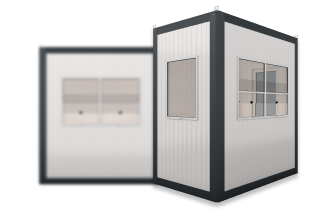 Sandwich Panel Cabin
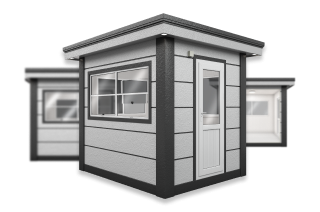 Metro City Cabin
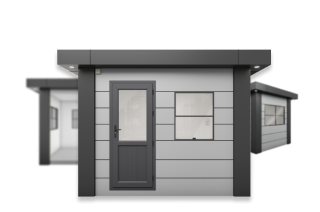 Kompo City Cabin
 Metro Lux Cabin
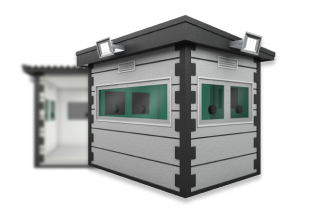 Armored Cabin
 Precast Cabin
 Wc - Shower Cabin
 Economic Container
 +90 (216) 321 3221
 info@karmodkiosk.com