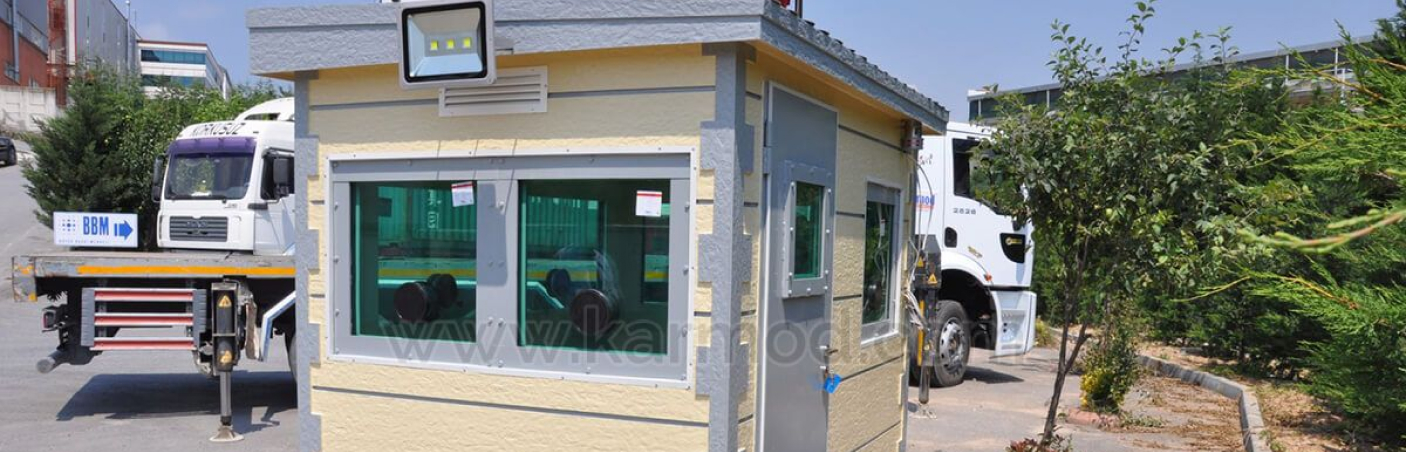
In California, security infrastructure often has to do more than simply mark an entry point. It has to work in busy commercial settings, adapt to different site conditions, and support staff who may be stationed in visible, exposed positions for long hours. That is why modular security guard booths with bullet-resistant features have become a more relevant option for businesses that need stronger protection without giving up practicality, speed, or day-to-day usability.
When people hear a phrase like “bullet-resistant security booth,” they sometimes imagine an oversized, highly specialized structure that only belongs in extreme environments. The reality is usually much more practical. In many California projects, the goal is not to create an aggressive-looking checkpoint. The goal is to give security personnel a better-protected working position while keeping the site organized, professional, and efficient.
Why this category matters more in California than many buyers first assume
California brings together a mix of site types that make security planning more demanding than a generic one-size-fits-all approach. Distribution centers, logistics facilities, ports, industrial compounds, commercial campuses, transportation properties, and private developments often rely on controlled access points where security staff remain highly visible. In some cases, these positions are expected to manage vehicle entry, monitor visitors, coordinate deliveries, and respond to irregular activity from a fixed location.
That changes the conversation. A booth is no longer just a shelter or a visual checkpoint. It becomes part of the operating logic of the property. It has to support visibility, staff comfort, access control, and, in some situations, a stronger level of physical protection than a standard unit can offer.
That is why modular guard booths with bullet-resistant features are not only about security strength. They are also about giving exposed positions a more appropriate working environment.
California sites also bring practical challenges that make modularity especially useful. Some projects need faster deployment. Some require a more compact footprint. Others need a structure that can fit into an already active site without creating a disruptive construction process. A modular solution answers those needs more easily than a traditional permanent build in many cases.
A stronger booth does not have to become a complicated project
One of the reasons buyers hesitate around this category is the assumption that higher protection automatically means a slower, more difficult, or less flexible project. But modular planning changes that equation. Instead of treating the structure as a major standalone building effort, it becomes possible to think in terms of deployment, function, and fit.
That is where broader modular planning starts to matter. Solutions such as modular kiosks reflect the core value of this approach. The site gets a defined operational point that can be planned more efficiently, installed with less disruption, and adapted to the way the property actually functions.
For California businesses, that matters because the need is often immediate and practical. A facility may be expanding. A gate may need better control. A visible staff position may no longer feel adequately protected. In those situations, decision-makers are usually not looking for theory. They are looking for a structure that can solve a real exposure issue without dragging the project into unnecessary complexity.
The role of bullet-resistant features in daily operations
The language around “bullet-resistant” can sometimes make the category sound more dramatic than it is. In actual use, bullet-resistant features are part of a broader operational decision. They come into the picture when the people inside the structure may need a stronger level of protection because of the visibility or vulnerability of their post.
That does not mean every site needs the same level of protection. It means some sites cannot rely on a standard cabin alone if the checkpoint carries more serious exposure. In those environments, a reinforced structure may support much more than physical defense. It can improve staff confidence, support calmer daily work, and make the entire security point feel more professionally aligned with the risk around it.
A solution such as an armored cabin fits naturally into that conversation. The point is not to turn the entrance into a fortress-like statement. The point is to provide a stronger protective shell where the role of the booth requires more than basic enclosure and weather protection.
This distinction matters because buyers sometimes treat protection as if it automatically conflicts with usability. In a good modular security project, it should not. A guard booth still has to function as a workplace. Staff need clear visibility, workable communication, and a layout that supports routine control activity. If the structure protects the user but makes the job harder, then the project has not fully solved the problem.
California buyers often need balance, not extremes
A lot of security decisions go wrong because they are framed too simply. Either the project gets treated like an ordinary cabin requirement, or it gets pushed into an overly dramatic “high-security” category that does not reflect how the site actually works. In practice, many California properties sit somewhere in between.
What they really need is a better balance between protection, appearance, and operational logic. The booth should feel strong without feeling excessive. It should support real site control without disrupting the image of the property. And it should allow security personnel to work in a way that feels sustainable over long shifts.
That balance is especially important in visible commercial and institutional environments, where the booth is not hidden in a back corner. It may sit at a front entrance, a visitor checkpoint, or a vehicle control lane where employees, vendors, contractors, and guests see it every day. In those settings, appearance still matters. The building should communicate order and seriousness, but it does not need to look visually overwhelming to do that.
The strongest projects in this category usually come from matching the booth to the site’s real exposure level, not from choosing the heaviest-looking option available.
Not every security concern points to the same type of structure
This is where a more honest project discussion becomes useful. Some sites need bullet-resistant features because the exposure of the checkpoint genuinely calls for them. Other sites may need a highly durable booth because of hard daily wear, repeated external abuse, or a vandalism concern rather than a ballistic one.
That is why buyers often benefit from comparing categories more carefully before making a final decision. In some projects, an anvi vandal kiosk may be the more appropriate answer where the main concern is resistance to harsh use and deliberate damage rather than a higher ballistic requirement. That kind of comparison helps keep the decision grounded in actual site conditions rather than assumptions.
The same logic applies to project size and context. A compact vehicle gate at a private site may need one kind of guard booth. A large industrial entry with heavier daily activity may need something else entirely. A sensitive facility with a more exposed perimeter may call for a stronger and more specialized structure from the start. The right answer usually becomes clear only when the role of the booth is defined properly.
Why modularity still matters when protection levels rise
There is a tendency to think that once bullet-resistant features enter the discussion, modularity becomes less relevant. In reality, the opposite is often true. The more specialized the need, the more important it becomes to manage the project efficiently.
A modular approach helps because it keeps attention on usable outcomes. The structure can be planned around the way the post will be staffed, the site will be accessed, and the perimeter will be controlled. It also helps limit the disruption that often comes with conventional construction. That matters in California, where businesses frequently need to improve operational security while keeping the site active and avoiding avoidable delays.
This is one reason Karmod Kiosk belongs naturally in this category. The value is not only in providing a booth, but in providing a modular solution that makes stronger site protection easier to integrate into daily operations. For buyers, that means the project can stay focused on function rather than becoming overwhelmed by the complexity people often assume comes with higher-protection structures.
What a smarter buying process actually looks like
The best decisions in this category usually start with clearer questions. Instead of asking whether a bullet-resistant booth sounds too extreme, it is far more useful to ask what the booth is expected to do every day and what kind of environment it is being placed into.
A strong evaluation usually comes down to four practical issues:
- how exposed the security position is
- what level of protection the staff may reasonably need
- how visible and public-facing the booth will be
- how quickly and efficiently the structure needs to be deployed
Once those points are clear, the conversation becomes much less abstract. The booth is no longer being judged by category labels alone. It is being judged by whether it supports the site, the staff, and the daily security routine in the right way.
That is especially important in California, where buyers often need solutions that are practical, presentable, and operationally durable all at once. A project that ignores one of those factors usually ends up underperforming, even if the structure looks right on paper.
Final thought
Security guard booths in California often need to do more than provide cover at an entrance. They need to support real security work, fit into active properties, and sometimes give staff a stronger level of protection than a standard structure can provide. That is why modular solutions with bullet-resistant features matter. They offer a more realistic middle ground between ordinary site infrastructure and overly rigid construction approaches.
For the right California site, the value is not in choosing something dramatic. It is in choosing something appropriate. A booth should reflect the actual exposure of the post, the practical demands of the property, and the daily needs of the people working inside it. When those three things align, the result is not just a stronger structure, but a smarter one.
In that sense, Karmod Kiosk fits the conversation well. The need is rarely just for a booth. It is for a solution that brings together protection, usability, and modular efficiency in a way that makes sense for the site as it really operates.

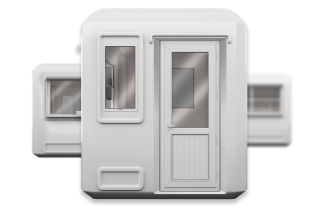 GRP Kiosk Cabin
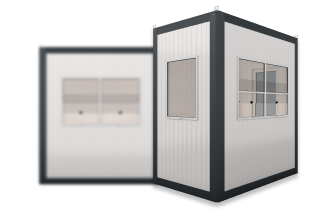 Sandwich Panel Cabin
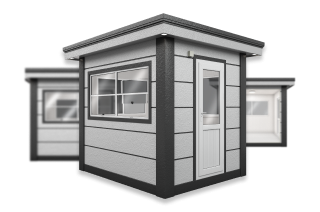 Metro City Cabin
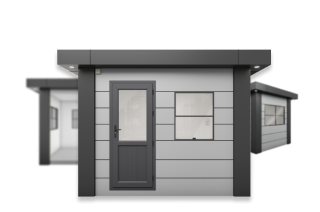 Kompo City Cabin
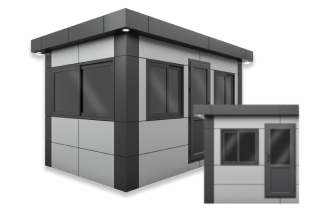 Metro Lux Cabin
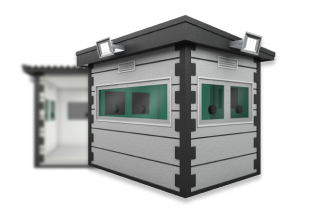 Armored Cabin
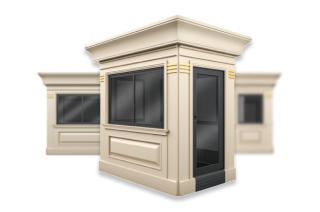 Precast Cabin
 Wc - Shower Cabin
 Economic Container
 +90 (216) 321 3221
 info@karmodkiosk.com