Portable kiosks have become a practical way for UK businesses to create customer-facing spaces without committing to a conventional permanent building. From retail parks and visitor attractions to transport hubs, events and commercial developments, a well-designed kiosk can provide a compact environment for sales, information, ticketing, security or customer service.
The appeal of a portable kiosk is not simply its size. Its real value comes from flexibility. A business can establish a dedicated operational point where it is needed, select a layout around a specific activity and, depending on the design, relocate the structure when site requirements change.
However, choosing the right kiosk involves more than selecting a cabin that fits the available space. Businesses should consider how customers will interact with the unit, how staff will work inside it, what equipment is required and how the structure will perform throughout changing British weather conditions.
This guide explores the main factors UK organisations should consider when planning a portable kiosk.
Where Can Portable Kiosks Be Used?
The term “kiosk” covers a broad range of applications.
For one business, it may be a small retail point serving customers through a window. For another, it could function as a staffed information centre, ticket office or entrance control point.
Common applications include:
The intended use should always be established before dimensions, windows or internal fittings are selected.
A ticket booth, for example, requires an efficient customer-facing service position. A security kiosk places greater emphasis on external visibility. A retail unit may require display areas, storage and space for payment equipment.
Starting with the operational purpose makes the rest of the design process much more straightforward.
Why UK Businesses Choose Portable Kiosks
Traditional construction is not always the most practical answer when a business needs a relatively small operational space.
A conventional building project can involve significant site activity and may be disproportionate to the amount of space actually required.
Portable and modular kiosk systems provide an alternative approach.
They can be particularly useful where businesses need to:
-
establish an operational point quickly;
-
use limited available space effectively;
-
reduce disruption at an active site;
-
create a recognisable customer-facing facility;
-
accommodate changing site requirements;
-
expand services without constructing a large building.
Portability can also be valuable for organisations whose operational requirements change over time.
A kiosk initially used at one entrance, for instance, may later be required elsewhere on the same development.
Choosing the Right Kiosk Material
Material selection can influence durability, maintenance, appearance and thermal performance.
For outdoor applications, the kiosk needs to cope with regular exposure to rain, wind, temperature changes and everyday wear.
GRP is one option frequently considered for modular kiosk applications because it combines relatively low weight with resistance to weather and corrosion.
A purpose-designed GRP Kiosk Cabin can therefore be suitable for applications such as retail points, information kiosks, ticket counters and security checkpoints where portability and outdoor durability are important.
The right material should ultimately reflect the operating environment.
A kiosk located in a sheltered retail development has different requirements from a unit positioned at an exposed car park or industrial entrance.
Plan Around Customer Interaction
One of the most important questions is how customers will interact with the kiosk.
Will transactions take place through a service window? Will customers enter the unit? Will there be a counter? Does the employee need to exchange tickets, documents or products with people outside?
These details determine much of the layout.
For window-based service, counter height and window position should make transactions comfortable for both employees and customers.
The design should also consider whether queues are likely to form.
A kiosk may work efficiently internally but still create problems if customers waiting outside obstruct pedestrian routes or nearby entrances.
For high-footfall locations, queue management should therefore form part of the overall site planning.
Think Carefully About Kiosk Size
A compact footprint is one of the main advantages of a kiosk, but making the structure too small can affect daily operations.
Before choosing dimensions, businesses should determine what needs to fit inside.
This could include:
-
one or more employees;
-
counters;
-
point-of-sale equipment;
-
computers;
-
shelving;
-
product storage;
-
ticketing equipment;
-
electrical systems;
-
personal storage.
There should also be enough room for staff to move comfortably.
A kiosk that appears adequate when empty may feel considerably smaller once furniture and equipment have been installed.
Planning the interior before selecting the final dimensions can prevent this problem.
Consider Staff Comfort
Customer experience is important, but the people working inside the kiosk may spend several hours there each day.
Staff comfort should therefore be treated as part of the core specification.
The design may need to address:
-
insulation;
-
heating;
-
ventilation;
-
lighting;
-
seating;
-
electrical sockets;
-
storage;
-
natural light.
This is particularly relevant in the UK, where an outdoor kiosk may need to perform through cold winter mornings, wet and windy conditions and warmer summer periods.
The building envelope should provide appropriate protection from external conditions while ventilation helps maintain a comfortable internal environment.
Designing for British Weather
Outdoor kiosks need to be designed for year-round conditions rather than only fair weather.
Rain is an obvious consideration, but wind exposure, moisture management and temperature variation also matter.
Roof design should allow water to drain effectively. Doors and windows should have suitable seals, and external materials should be appropriate for prolonged outdoor exposure.
Location can also affect performance.
A kiosk positioned in an exposed open area may experience very different wind and rain conditions from one installed close to an existing building.
Site-specific conditions should therefore influence the specification.
Appearance Matters in Customer-Facing Locations
A kiosk is often one of the first structures a customer sees.
This makes visual design particularly important in retail, leisure, hospitality and visitor environments.
The unit should ideally complement the wider location rather than appearing as an unrelated temporary structure.
For businesses seeking a more architectural appearance, a Kompo City Cabin can provide an alternative approach, combining an insulated cabin structure with a modern exterior suited to urban and commercial applications.
Colour, external finish, signage and glazing can all contribute to how the kiosk is perceived.
The objective should be to combine practical operation with a professional appearance appropriate to the brand and location.
Branding a Portable Kiosk
Because kiosks occupy prominent customer-facing positions, they can also function as physical brand touchpoints.
Businesses may consider incorporating:
Branding should be integrated into the overall design rather than added without considering window positions, doors or customer sightlines.
Clear signage is particularly important where the kiosk performs a specific function such as ticket collection, visitor information or check-in.
Customers should be able to understand the purpose of the unit quickly.
Electrical Requirements Should Be Planned Early
Most modern kiosks require electricity.
Depending on their purpose, electrical equipment may include:
The required electrical capacity should be identified before installation.
Adding equipment later without considering the original electrical design can result in awkward cable arrangements or insufficient socket provision.
Businesses should also consider where equipment will be positioned so that sockets and cable routes can be planned accordingly.
Security Considerations for Retail and Service Kiosks
Customer-facing kiosks may contain cash, electronic equipment, products or sensitive business information.
Security should therefore form part of the design process.
Depending on the application, considerations may include:
The appropriate level of security depends on the location and what is stored inside.
A daytime information kiosk in a managed venue may require a relatively straightforward security specification. A retail kiosk left unattended overnight may require additional measures.
The specification should be proportionate to the actual risk.
Accessibility and Customer Experience
The area around the kiosk should be easy for customers to approach and use.
Site planning should consider pedestrian routes, service heights and available space around the unit.
Where customers need to enter the kiosk, internal circulation becomes particularly important.
Where service takes place through a window or counter, the interaction point should be designed with a broad range of users in mind.
Good kiosk design is not only about fitting the structure into the site. It is about making the service itself straightforward to access.
Portable Kiosks for Seasonal Businesses
Portability can be especially valuable for seasonal operations.
Visitor attractions, outdoor events, holiday destinations and temporary retail projects may experience strong demand during only part of the year.
A portable kiosk can provide an operational space during the active season without necessarily requiring the same approach as a permanent building.
Potential applications include:
The ability to reposition or reuse a kiosk can improve its value across multiple operating periods.
Maintenance and Long-Term Use
Although modular kiosks can have relatively straightforward maintenance requirements, routine inspection remains important.
Businesses should periodically check:
-
doors and locks;
-
window seals;
-
roof drainage;
-
external surfaces;
-
electrical systems;
-
ventilation;
-
flooring.
Customer-facing areas may require more frequent cleaning because presentation contributes directly to the visitor experience.
A well-maintained kiosk can continue to look professional while supporting reliable daily operation over a long period.
What Should You Consider Before Buying a Portable Kiosk?
Before choosing a model, UK businesses should define the operational requirements clearly.
Useful questions include:
-
What will the kiosk be used for?
-
How many employees will work inside?
-
Will customers enter or be served through a window?
-
What equipment is required?
-
How much storage is needed?
-
Will the kiosk operate throughout the year?
-
Is the location exposed to wind and rain?
-
What electrical services are required?
-
Does the exterior need to match an existing brand or development?
-
Could the kiosk need to be relocated in the future?
Answering these questions can make it considerably easier to identify an appropriate design.
Choosing a Portable Kiosk for Your UK Business
A successful portable kiosk should combine efficient use of space with durability, staff comfort and a positive customer experience.
There is no single design that works for every application.
Retail businesses may prioritise branding, display and customer interaction. Event operators may focus on portability and rapid deployment. Security applications require good visibility, while ticketing operations need efficient service windows and equipment layouts.
The most effective approach is therefore to begin with the activity that will take place inside the kiosk.
Once that has been established, businesses can determine the appropriate size, material, glazing, internal layout and external appearance.
By planning these elements together, a portable kiosk can become more than a temporary structure. It can provide a practical, professional and adaptable space that supports day-to-day operations while fitting naturally into the wider commercial environment.

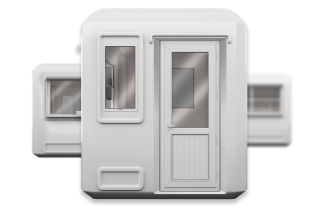 GRP Kiosk Cabin
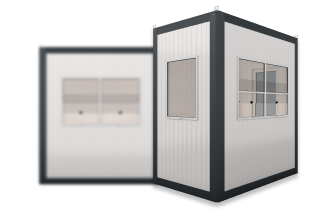 Sandwich Panel Cabin
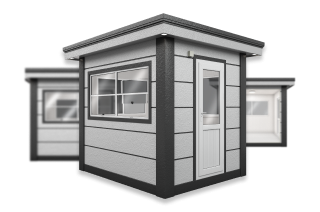 Metro City Cabin
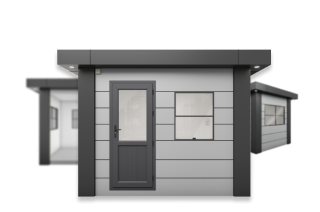 Kompo City Cabin
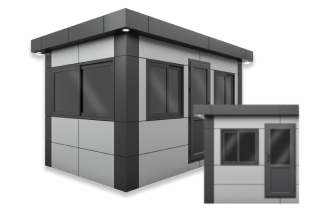 Metro Lux Cabin
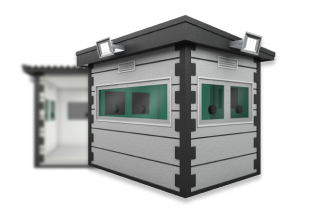 Armored Cabin
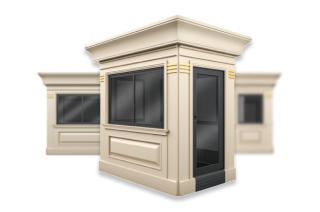 Precast Cabin
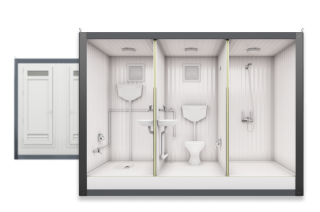 Wc - Shower Cabin
 Economic Container
 +90 (216) 321 3221
 info@karmodkiosk.com