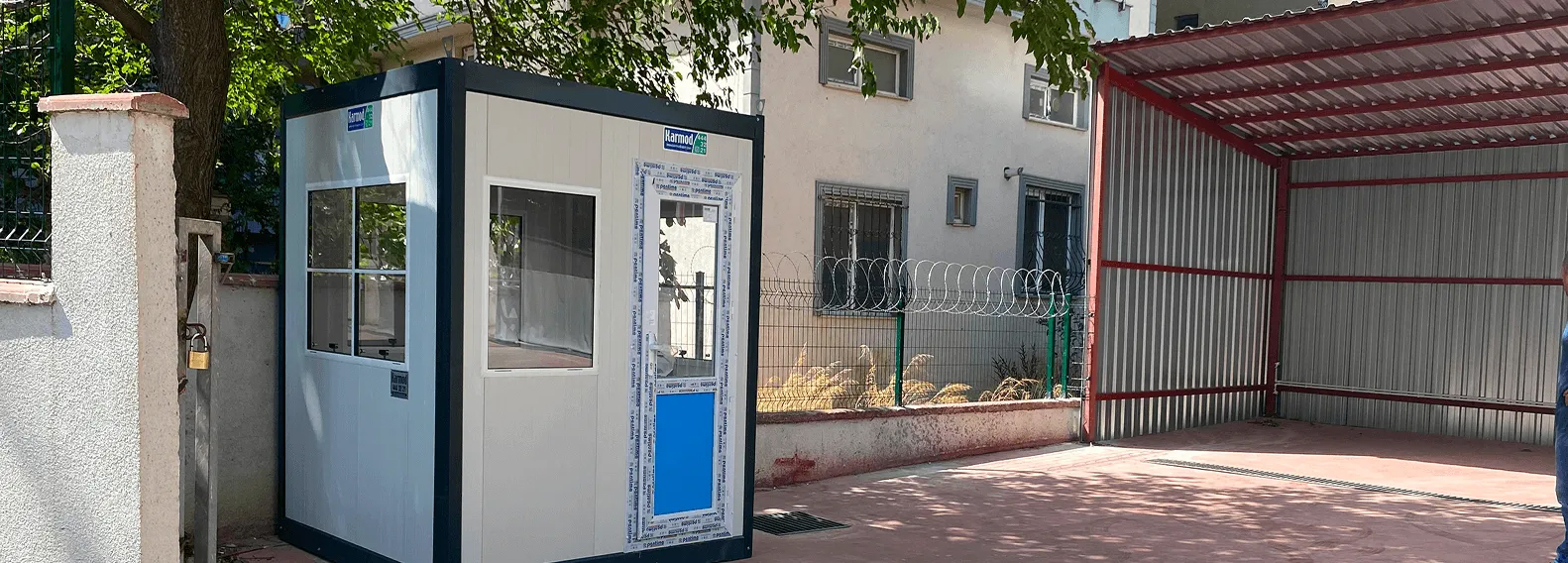
Versatile Cabin Solutions for Worksites, Commercial Use and Everyday Site Support
Some structures are built to impress on paper but prove awkward in daily use. Panel cabins tend to do the opposite. They are valued not because they are complex, but because they solve real space problems in a straightforward way. When a site needs a usable room quickly — whether for office work, staff support, security, storage, waiting space, or general operations — a panel cabin often becomes the most sensible answer.
Karmod Kiosk manufactures panel cabins for businesses, contractors, institutions, and site operators who need enclosed space that is practical, durable, and ready to work from the start. These cabins are used across a wide range of sectors because they are easy to adapt, quick to install, and suitable for both short-term and longer-term use.
A good panel cabin is not simply a box with walls. It needs to feel workable once people start using it. That means sensible internal proportions, a reliable structure, weather protection, and enough flexibility to suit more than one purpose over its lifetime.
What Are Panel Cabins?
Panel cabins are modular enclosed units built using prefabricated wall and roof systems, typically designed to create practical interior space without the long process associated with conventional construction. They are used where a project needs speed, flexibility, and straightforward installation.
In one setting, a panel cabin may serve as a site office. In another, it may be used as a security point, a staff changing room, a technical room, a checkpoint, or a compact service building. That is part of their appeal. They are not locked into one narrow use case, which makes them especially useful in environments where needs can shift over time.
For many buyers, the main attraction is simple: a panel cabin provides usable covered space without turning a practical requirement into a drawn-out building project.
Why Panel Cabins Are Widely Used
There is a reason panel cabins appear in so many sectors. They sit in the middle ground between permanence and flexibility. They feel more substantial than an improvised temporary structure, yet they can usually be delivered and installed far more quickly than a traditionally built room or extension.
This makes them particularly useful where:
a site needs to become operational quickly
available space must be used efficiently
a building may need to serve different purposes over time
expansion may happen in stages
construction time needs to be reduced
support space is needed without overcommitting to a full permanent build
For project-led businesses and growing sites, that balance is often exactly what makes the format worthwhile.
Common Uses for Panel Cabins
One of the strengths of panel cabins is that they do not belong to only one industry. Their practicality makes them suitable in a wide variety of environments.
They are commonly used as:
site offices
security and gate cabins
staff rest and welfare rooms
waiting areas
storage rooms
canteen or support spaces
technical control points
visitor reception units
temporary administration rooms
service buildings on active worksites
What matters most is not the label attached to the cabin, but how well the internal layout matches the role it has been given. A well-planned unit can often keep serving the site long after its original purpose has changed.
Size Planning and Functional Layout
The best panel cabin is not necessarily the biggest one. The right size depends on how the space will be used, how many people will work inside it, and what kind of furniture or equipment needs to fit into the room.
Size (m²)
Typical Use
Capacity
4–6 m²
Guard point, compact support room, small control cabin
1 person
8–12 m²
Standard office, staff room, service point
1–3 persons
12–20 m²
Extended office or multi-purpose support cabin
2–4 persons
20 m²+
Larger modular operational cabin or linked-unit setup
4+ persons
Internal planning may include desks, counters, shelves, partitions, technical equipment, staff seating, lockers, or storage depending on the project. This is where panel cabins become more useful than many people first assume. They can be much more adaptable than their simple exterior suggests.
The Advantage of a Panel-Based Structure
The panel construction approach is important because it affects both performance and practicality. A properly manufactured panel cabin offers a more stable and usable structure than many purely makeshift site buildings, while still remaining easier to handle than conventional permanent construction.
This usually means:
faster installation
better insulation potential
easier repeat production
simpler adaptation to different layouts
cleaner site organisation
a more consistent finish
In everyday terms, that translates into a cabin that feels more deliberate and easier to work with.
Key Features of Karmod Kiosk Panel Cabins
Karmod Kiosk develops panel cabins for regular, practical use in real operating environments rather than just for catalogue presentation.
Durable Modular Build: Designed for reliable use in active commercial and site conditions.
Insulated Wall System: Helps improve indoor comfort throughout the year.
Flexible Use Potential: Suitable for office, support, welfare, service, and control functions.
Practical Interior Planning: Can be arranged around equipment, furniture, and user flow.
Electrical Preparation: Suitable for lighting, communication tools, and routine site equipment.
Easy-to-Maintain Surfaces: Supports day-to-day upkeep without unnecessary effort.
Weather-Resistant Exterior: Designed for long-term outdoor placement where required.
Adaptable Sizes: Can be planned according to small or larger functional needs.
Professional Appearance: Offers a more organised alternative to improvised temporary buildings.
Fast Deployment: Makes usable space available sooner.
These are not abstract advantages. They are the reasons panel cabins continue to be chosen by sites that need to work efficiently from the moment the unit arrives.
Typical Sectors and Environments
Panel cabins are used across many sectors because the demand for quick, reliable enclosed space appears almost everywhere.
Typical environments include:
construction and infrastructure projects
industrial facilities
logistics and warehouse compounds
transport-related sites
municipal and public service areas
education and training campuses
event grounds and seasonal operations
residential development projects
security-controlled premises
commercial and mixed-use sites
In many of these settings, the cabin becomes part of the basic infrastructure of the project rather than a secondary add-on.
Construction and Technical Overview
Feature
Description
Structural System
Modular cabin construction with panel-based wall system
Wall Build-Up
Insulated prefabricated panel structure
Roof
Weather-protected modular roof assembly
Entrance Door
Secure cabin access door
Windows
Glazed window options depending on layout
Floor Finish
Easy-clean, non-slip flooring options
Electrical Provision
Integrated internal wiring infrastructure
Lighting
LED lighting suitable for daily operational use
HVAC Readiness
Compatible with heating and cooling equipment
Insulation Performance
Suitable for year-round indoor use depending on specification
Exterior Durability
Designed for repeated or long-term site use
Installation
Fast delivery and on-site setup
Configuration Options
Custom size, glazing, layout, finishes, and internal preparation
Each unit is produced to support practical daily use, straightforward installation, and more dependable performance than short-lived temporary alternatives.
A Practical Choice for Sites That Need Space Without Delay
Panel cabins continue to be widely used because they answer a very common need with very little complication. They create proper enclosed space where and when it is needed, without dragging the project into a long construction process or forcing the operator into an oversized building solution.
For some buyers, that means a compact office. For others, it means a secure support cabin, a staff area, a control point, or a flexible room that may take on several roles over time. In all of these cases, the value comes from the same thing: the cabin is ready to do useful work quickly and with very little wasted effort.
Karmod Kiosk develops panel cabin solutions for projects that need practical space, reliable build quality, and a more efficient route to on-site usability. Whether the requirement is modest or more extensive, a well-planned panel cabin provides a clear, durable, and workable answer.
FAQ
1. What is a panel cabin used for?
It is used as a modular enclosed space for office work, security, staff support, storage, service use, and many other practical site functions.
2. Where can panel cabins be installed?
They can be installed on construction sites, industrial plots, logistics compounds, public service areas, education sites, event grounds, and many other operational locations.
3. Are panel cabins only for temporary use?
No. They can be used for both temporary and longer-term needs depending on the project and specification.
4. Can a panel cabin be customised?
Yes. Size, layout, glazing, finishes, and internal preparation can all be adapted according to the intended use.
5. Is a panel cabin faster to install than a conventional small building?
Yes. Because it is modular and panel-based, it can usually be delivered and installed much more quickly than traditional construction.
6. Can it be used as an office?
Yes. One of the most common uses for a panel cabin is as a compact office or administrative space.
7. Is it suitable for outdoor placement?
Yes. It is designed for external site use depending on the project requirements and configuration.
8. Are different sizes available?
Yes. Panel cabins can be produced in a range of sizes depending on how much space the user needs.
9. Does it support insulation and electrical systems?
Yes. Depending on the specification, it can include insulated wall systems and electrical preparation for daily use.
10. Why are panel cabins so popular across different sectors?
Because they offer a fast, practical, and flexible way to create usable enclosed space without the delay and complexity of conventional building methods.

 GRP Kiosk Cabin
 Sandwich Panel Cabin
 Metro City Cabin
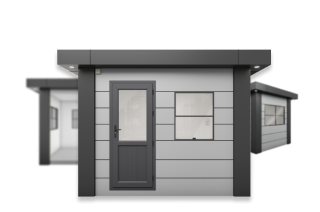 Kompo City Cabin
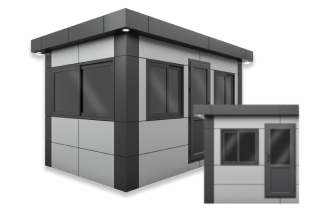 Metro Lux Cabin
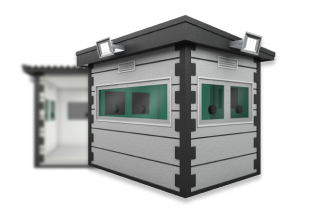 Armored Cabin
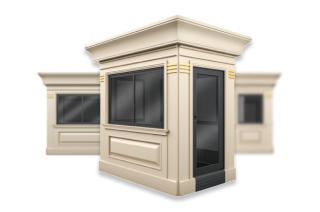 Precast Cabin
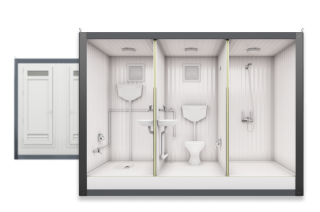 Wc - Shower Cabin
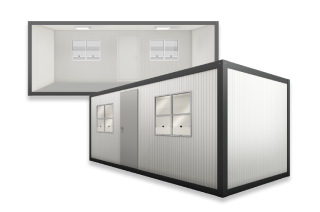 Economic Container
 +90 (216) 321 3221
 info@karmodkiosk.com