Choosing the right physical space can have a significant impact on how a retail business operates. For some UK businesses, a conventional shop or permanently constructed retail unit remains the most appropriate solution. For others, a modular kiosk can provide the space they need without the scale or complexity associated with a traditional building.
The decision is particularly relevant for businesses operating in retail parks, shopping destinations, transport hubs, leisure facilities, visitor attractions and seasonal locations. In these environments, the priority may be to establish a compact sales or service point in a specific location rather than create a full-size shop.
Modular kiosks and traditional retail units should not be viewed as direct substitutes in every situation. Each serves different operational requirements.
Understanding those differences can help businesses select a format that suits their location, customer journey and long-term plans.
What Is a Modular Retail Kiosk?
A modular retail kiosk is a prefabricated structure designed to provide a compact commercial space.
Depending on its configuration, it can be used for:
-
product sales;
-
customer service;
-
ticketing;
-
information services;
-
food and beverage sales;
-
check-in;
-
collection points;
-
promotional activity.
Unlike a conventional retail building that is largely constructed at its final location, modular units are typically manufactured away from the operational site before being transported for installation.
This approach can reduce the amount of construction activity required at the final location.
The kiosk itself can still incorporate many of the features expected from a professional commercial environment, including glazing, counters, lighting, electrical installations, signage and storage.
What Is a Traditional Retail Unit?
A traditional retail unit generally forms part of a permanent building or is constructed using conventional building methods.
It may be a high-street shop, a unit within a shopping centre or a purpose-built standalone commercial property.
These spaces can provide substantial floor area and support complex retail operations.
For businesses requiring extensive customer circulation, large stockrooms, fitting rooms or multiple departments, a conventional retail environment may be the more logical option.
However, not every commercial operation requires that amount of space.
A business that primarily needs one or two members of staff to serve customers may find that a large retail unit introduces space and operational requirements that are unnecessary for its business model.
Space Efficiency
One of the clearest differences between the two approaches is how space is used.
Traditional retail premises often need to accommodate customer circulation, displays, storage, staff areas and potentially several service points.
A kiosk typically concentrates operations into a much smaller footprint.
This can be useful where the commercial objective is relatively focused.
For example, a business selling tickets does not necessarily need a large customer-accessible interior. The transaction can take place through a service window.
Similarly, a coffee or takeaway operator may be able to serve customers from a compact kiosk while using the majority of the internal area for staff and equipment.
Good kiosk design therefore depends heavily on understanding exactly how every part of the space will be used.
Installation and Disruption
Traditional construction can involve a significant amount of work at the final location.
Depending on the project, this may include material deliveries, building trades, equipment and extended site activity.
For an operating retail park, leisure destination or commercial site, disruption can be an important consideration.
Modular construction takes a different approach because much of the structure can be prepared away from the final site.
Once the location is ready, the completed or substantially completed unit can be transported for installation.
This does not eliminate the need for site preparation. Foundations, access and utility connections still need to be planned correctly.
However, shifting a greater proportion of work away from the operational location can make the installation process easier to manage.
Flexibility for Changing Business Requirements
Retail requirements change.
Businesses test new markets, customer traffic patterns evolve and commercial developments are reconfigured.
A permanent retail unit is normally closely tied to its location.
A modular kiosk may offer greater flexibility where relocation is technically and operationally practical.
This can be particularly useful for:
-
seasonal businesses;
-
temporary commercial areas;
-
visitor attractions;
-
expanding retail developments;
-
event operators;
-
businesses testing new locations.
For organisations that expect their requirements to evolve, the ability to repurpose or potentially relocate a unit can be valuable.
A GRP Kiosk Cabin can be considered for retail, service and customer-facing applications where businesses require a compact structure with a durable exterior and flexible use.
Appearance and Customer Perception
The word “portable” can sometimes create the impression that a kiosk must look temporary.
That does not have to be the case.
Modern modular kiosks can be designed with professional exterior finishes, substantial glazing, branded signage and contemporary architectural details.
This is particularly important in premium retail environments.
A kiosk positioned outside a shopping centre, hotel or visitor attraction becomes part of the customer's first impression of the business.
The external design should therefore reflect both the brand and the surrounding architecture.
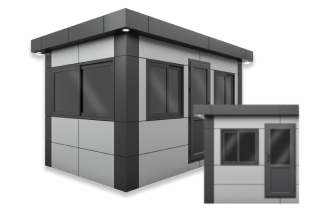
For locations where visual presentation has a particularly important role, a Metro Lux Cabin can offer a more contemporary solution for customer-facing commercial and service environments.
The key is to treat the kiosk as part of the business identity rather than simply as a functional enclosure.
Branding Opportunities
Both traditional shops and modular kiosks can be branded effectively, but they offer different opportunities.
A conventional retail unit may provide large shopfronts and substantial internal areas for visual merchandising.
A kiosk has a smaller surface area, so branding needs to work more efficiently.
Potential elements include:
Customers should be able to identify what the kiosk offers quickly, particularly in high-footfall environments.
Strong visual communication becomes especially important when the unit competes for attention with surrounding shops, signage and pedestrian activity.
Customer Interaction
Traditional shops typically allow customers to enter, browse and interact with products inside.
Kiosks often operate differently.
Transactions may take place through a service window or counter, which can make customer interaction faster and more direct.
This model works particularly well for activities such as:
The correct format depends on the customer journey.
If customers need time to browse a large range of products, a traditional shop may be more appropriate.
If the transaction is relatively simple, a kiosk can provide a more efficient format.
Staff Working Conditions
The compact nature of a kiosk makes internal planning particularly important.
A traditional retail unit usually provides more space for staff movement and storage. In a kiosk, each square metre needs to serve a clear purpose.
The design should consider:
-
workstation position;
-
storage;
-
seating where required;
-
electrical equipment;
-
heating;
-
ventilation;
-
lighting;
-
staff movement.
A poorly planned kiosk can feel restrictive even when its overall dimensions appear adequate.
Designing around the employee's workflow can help avoid this problem.
Frequently used equipment should be easy to reach, while storage should not obstruct circulation or customer interaction.
Weather and Thermal Performance
A standalone retail kiosk in the UK needs to operate in changing weather conditions.
Cold winter temperatures, frequent rain, wind and warmer summer periods all affect the building.
The specification should therefore consider the complete envelope, including:
-
wall construction;
-
roof construction;
-
doors;
-
windows;
-
seals;
-
insulation;
-
ventilation.
Where staff spend full working days inside the kiosk, thermal comfort becomes especially important.
Large customer-facing windows may be desirable for visibility and branding, but glazing can also affect heat loss and solar gain.
The building should therefore be designed as a complete system rather than selecting individual features independently.
Utilities and Equipment
Both modular and traditional retail units may require access to services.
The exact requirements depend on the business.
A straightforward ticket kiosk might only need electricity and data connectivity.
A food or beverage operation could require:
These requirements should be identified early.
One of the most common mistakes in compact commercial spaces is deciding on the building layout before confirming the equipment specification.
Once large equipment, work surfaces and storage are added, the available staff space can reduce quickly.
Planning services and equipment at the beginning can produce a much more efficient final layout.
Security Outside Trading Hours
Retail units may contain stock, payment equipment and other valuable items.
Security therefore needs to be considered regardless of whether the structure is modular or traditionally built.
For a kiosk, businesses should think about what happens when staff leave at the end of the day.
Depending on the site, appropriate measures could include:
The appropriate level of protection depends on the location, operating hours and contents of the kiosk.
A unit inside a controlled commercial development may face a different risk profile from a standalone kiosk accessible from a public area overnight.
Maintenance Requirements
All retail buildings require maintenance.
Traditional buildings may involve roofing, façades, internal finishes, mechanical systems and larger areas of glazing.
A kiosk generally has a smaller building envelope, but it is often highly exposed to daily customer contact and outdoor conditions.
Regular checks should include doors, windows, seals, external finishes and service openings.
Customer-facing surfaces should also be kept clean and presentable.
For retail applications, maintenance affects more than the technical condition of the structure. It also affects how customers perceive the brand.
When Does a Modular Kiosk Make Sense?
A modular kiosk can be particularly effective when the business requires a compact and clearly defined operational point.
Typical scenarios include:
-
a ticket office at a visitor attraction;
-
a customer information point;
-
a small takeaway operation;
-
a retail booth at a leisure destination;
-
a collection point;
-
a seasonal sales unit;
-
a service kiosk in a car park;
-
a temporary or evolving commercial location.
In these situations, constructing a full traditional retail building may provide significantly more space than the operation actually requires.
When Might a Traditional Retail Unit Be Better?
Modular kiosks are not the right solution for every retailer.
A conventional shop may be more appropriate where the business depends on customers entering the premises and spending time browsing.
Traditional units can also be better suited to operations requiring:
The choice should therefore be driven by the operating model rather than by construction method alone.
Questions to Ask Before Choosing
UK businesses comparing the two approaches should consider:
-
How much internal space does the operation genuinely require?
-
Do customers need to enter the building?
-
How many employees will work inside?
-
Is the business seasonal or permanent?
-
Could the location change in the future?
-
What utilities are required?
-
How important is exterior branding?
-
What equipment needs to fit inside?
-
What level of storage is required?
-
How quickly does the business need the space to become operational?
The answers can make it much easier to identify which approach is better aligned with the project.
Choosing the Right Retail Format for Your UK Business
The choice between a modular kiosk and a traditional retail unit should begin with the business model.
Traditional retail spaces remain valuable where customers need substantial room to browse, where businesses hold large quantities of stock or where complex internal layouts are required.
Modular kiosks serve a different purpose.
They can provide compact, customer-facing commercial spaces for businesses that need efficient service points, flexible site use and a clearly defined operational footprint.
For UK businesses, factors such as weather resistance, staff comfort, branding, security and utilities should all be considered alongside the amount of space required.
The most successful retail space is not necessarily the largest or the most permanent. It is the one that supports the way the business actually operates.
By defining customer interaction, staff requirements, equipment and future plans before choosing the structure, businesses can select a retail format that provides the right balance of functionality, presentation and flexibility.

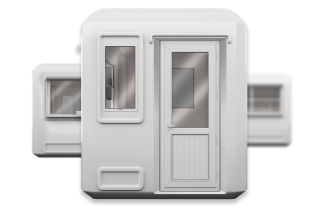 GRP Kiosk Cabin
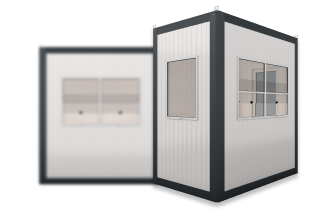 Sandwich Panel Cabin
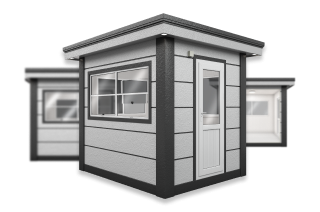 Metro City Cabin
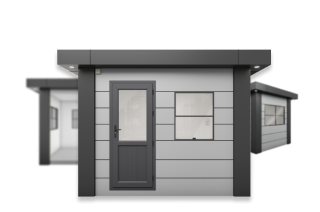 Kompo City Cabin
 Metro Lux Cabin
 Armored Cabin
 Precast Cabin
 Wc - Shower Cabin
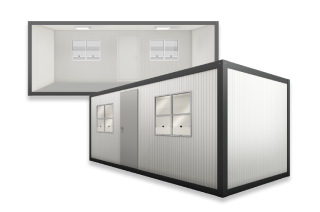 Economic Container
 +90 (216) 321 3221
 info@karmodkiosk.com