Bulletproof security buildings are often judged too quickly. Many buyers assume they belong only in extreme-risk environments, look overly aggressive, make daily work harder, or cost more than they could ever justify. In practice, the decision is usually much more grounded than that. What matters most is not the label itself, but how the building will be used, who it is protecting, and how exposed that part of the site really is.
When companies start exploring stronger security structures, they are usually responding to a practical concern. A checkpoint may feel too exposed. A gatehouse may no longer match the level of risk around it. A fixed control position may need stronger protection without sacrificing visibility or day-to-day usability. But before the discussion reaches real project questions, it often gets pulled off course by assumptions.
That is where most confusion begins: people tend to evaluate bulletproof security buildings as an idea, rather than as a site-specific solution.
Most buyers are not trying to purchase something dramatic. They are trying to solve a problem at the perimeter, at an access point, or in a controlled-entry zone where staff remain visible and exposed for long periods of time. Once the discussion starts from that reality, the category becomes much easier to understand.
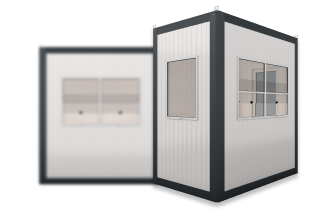
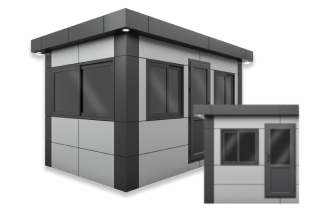
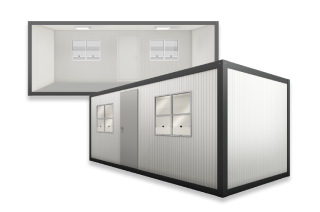
That is also why more general modular options such as modular kiosks cabins are often part of the same decision path. Some projects begin with a standard booth requirement and only move toward higher protection after the actual site conditions are reviewed more carefully. In other words, the decision is rarely emotional. It is usually operational.
This is probably the most common misunderstanding. People often hear the word “bulletproof” and immediately imagine defense compounds, armed checkpoints, or highly exceptional sites. But many real projects sit outside that world entirely.
There are industrial facilities, logistics compounds, infrastructure entrances, utility properties, and controlled-access commercial sites where the need for stronger protection can be completely rational. In these locations, the issue is not whether the site looks dramatic from the outside. The issue is whether the building is expected to protect someone working in a fixed position that may be more exposed than a standard security cabin can reasonably handle.
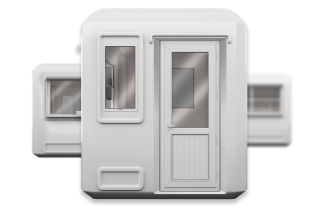
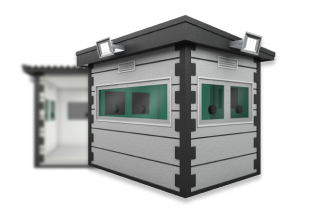
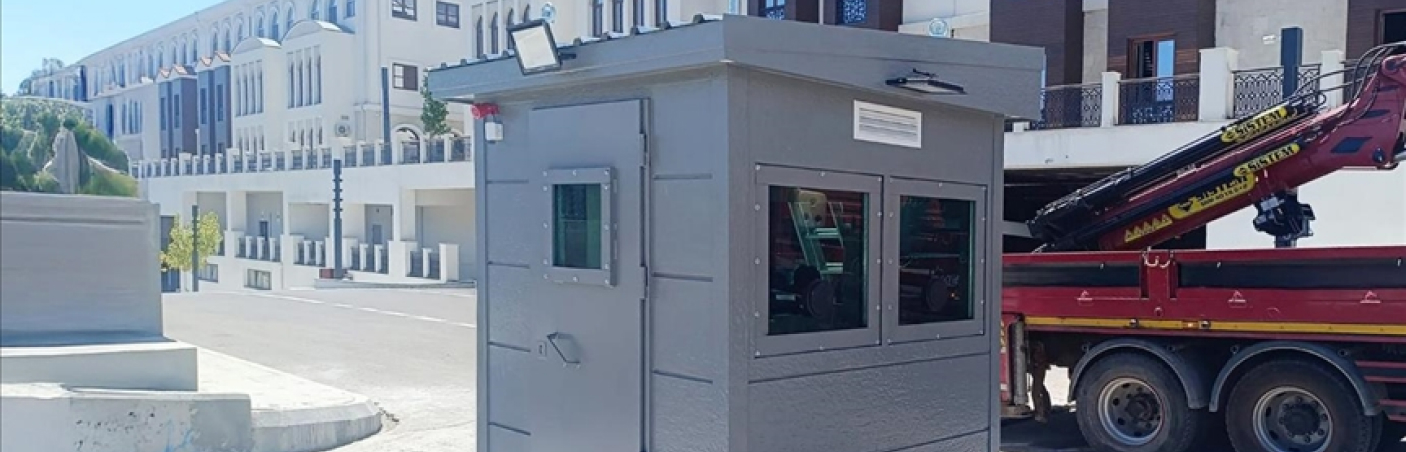
A structure such as an armored cabin becomes relevant precisely in those conversations. The purpose is not to create an intimidating presence. The purpose is to provide a more appropriate level of protection where the role of the building requires it.
This assumption also holds a lot of buyers back. There is a tendency to think that the more secure a building becomes, the more oversized, severe, or visually disruptive it must look. In reality, many organizations want exactly the opposite. They want stronger performance without turning the structure into the most visually aggressive part of the property.
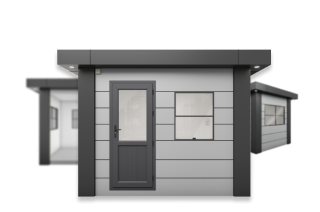
A well-considered security building can still feel measured, compact, and professional. It can fit into a corporate, institutional, or infrastructure environment without looking exaggerated. That matters because many of these buildings sit in highly visible parts of a site, where employees, contractors, visitors, and delivery teams see them every day.
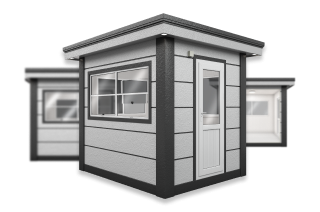
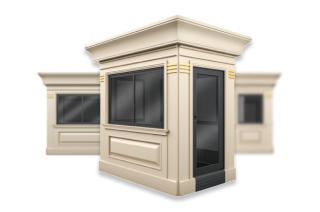
Sometimes this is also where buyers begin comparing protection levels more honestly. Not every difficult site condition calls for the same response, and not every hard-wearing requirement points directly to ballistic protection. In some cases, an anvi vandal kiosk may make more sense where the real issue is external abuse resistance and durability rather than a higher ballistic standard. That kind of comparison usually leads to a better decision.
This is one of the least helpful myths because it confuses strength with inconvenience. A security structure still has to function as a working environment. If the people inside it cannot see clearly, communicate effectively, stay comfortable through long shifts, and manage access smoothly, then the building has not really solved the problem it was meant to solve.
A good project does not separate protection from usability. It brings them together. The building should allow staff to do their job with confidence while also giving them a stronger layer of protection than a standard unit might provide. If the structure feels restrictive, awkward, or poorly suited to routine use, then the issue is not the concept of a protected building. The issue is that the solution has not been planned well enough.
This is exactly why Karmod Kiosk fits naturally into this kind of discussion. Buyers at this stage are not simply looking for reinforced walls. They are looking for a structure that performs under pressure and still supports the practical rhythm of daily operations.
It is true that bulletproof security buildings cost more than standard units. But the assumption that they are automatically “too expensive” is often based on incomplete thinking. The real question is not whether they cost more. The real question is whether the added level of protection is justified by the actual risk and exposure of the site.
A more realistic evaluation usually includes the following points:
Once the discussion is framed this way, the pricing question becomes much more practical. Some projects only need a standard modular building. Some need a tougher anti-vandal solution. And some genuinely require a more protective structure because the people inside it are working in a position where the consequences of under-protection are too serious to ignore.
The most useful question is not whether a stronger building costs more, but whether the site can responsibly operate without that added level of protection.
The easiest way to move beyond these myths is to stop thinking in labels and start thinking in use cases. “Bulletproof” sounds extreme when discussed in the abstract, but real decisions become much clearer when the structure is evaluated according to its role on the site. Who will occupy it, how visible that position is, what kind of exposure exists around it, and what the building is expected to handle each day all matter more than the assumptions people bring into the conversation.
That shift makes a major difference. Instead of asking whether the category sounds excessive, buyers begin asking whether the structure is right for the actual conditions on the ground. That is the point where better decisions usually begin.
This is also where Karmod Kiosk becomes especially relevant. In real projects, the goal is not to buy something that sounds stronger on paper. The goal is to match a structure to a site, a workflow, and a level of exposure in a way that makes sense over the long term.